

How a Hurricane Claim Lawyer Can Help After a Denial or Low Offer
A hurricane claim lawyer can review your policy, gather evidence of the damage, and challenge an insurer's denial, low offer, or delay. If your roof and interior were damaged, keep photos, repair estimates, receipts, and every message from your insurer. Do not assume the first decision is final.
Insurance disputes often turn on what caused the damage and how much repairs will cost. An independent investigation can help show what the insurer missed and support a request for more payment.
I'm Michael Giardina, a partner at Godbey Giardina Law Group. As a hurricane claim lawyer, I help policyholders with property damage and insurance disputes, including denied claims and bad-faith litigation.
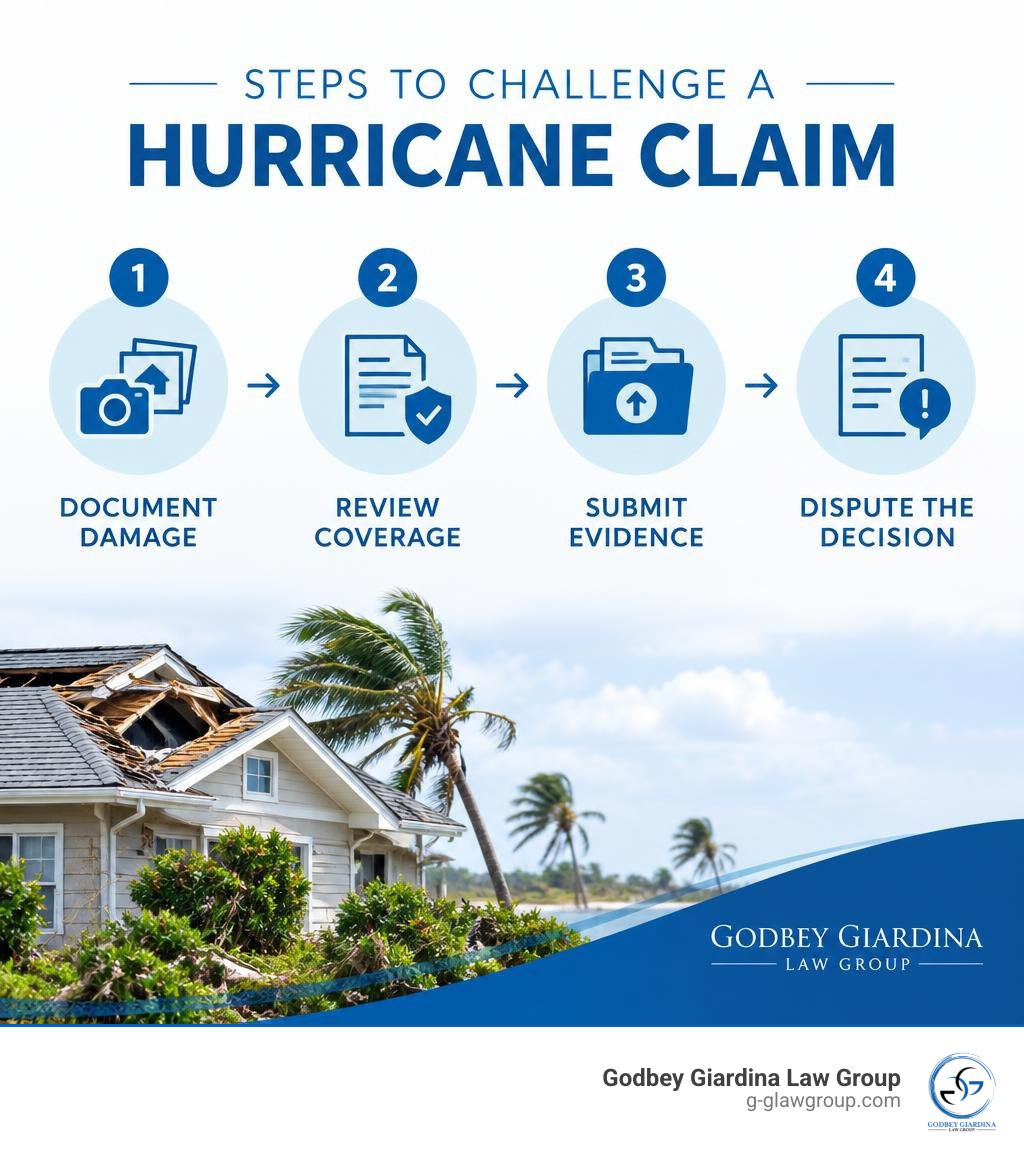
When Should You Hire a Hurricane Claim Lawyer?
Navigating the aftermath of a major storm is physically exhausting and emotionally draining. While some minor claims proceed smoothly, complex structural losses often turn into adversarial battles against multi-billion-dollar insurance carriers.
What Does a Hurricane Claim Lawyer Do for Policyholders?
Insurance policies are dense legal contracts written by insurers to limit their liability. When you retain an attorney, we take over the entire dispute process to balance the scales.
Here is what our legal team handles on your behalf:
- In-Depth Policy Review and Coverage Analysis: We examine your declarations page, policy endorsements, exclusions, and deductible triggers to determine every avenue of recovery available to you.
- Comprehensive Damage Investigation: We do not rely on the insurer's rushed field adjusters. Instead, we bring in licensed structural engineers, building envelope consultants, and certified estimators to document the full scope of destruction.
- Managing Insurer Communications: Once we represent you, your carrier must communicate directly with us. This prevents adjusters from taking advantage of confusing policy jargon or pressuring you into signing premature settlement releases.
- Aggressive Negotiation and Bad-Faith Pursuit: If an insurer refuses to honor the contract, unreasonably delays payment, or misrepresents policy provisions, we utilize statutory bad-faith laws to hold them legally accountable.
- Litigation and Trial Preparation: If the carrier refuses a fair resolution, our insurance dispute litigation lawyers file a formal lawsuit and take your case to court.
Our property damage lawyer team ensures you are never left fighting an insurance giant alone.
When Should You Contact a Hurricane Claim Lawyer Instead of Handling the Claim Yourself?
Not every claim requires an attorney. If you suffered minimal shingle loss, your carrier promptly sends an adjuster, and they cut a check that fully covers your independent contractor’s bid minus your deductible, you likely do not need legal representation.

However, you should seek immediate legal counsel if you encounter any of the following red flags:
- Disputed Causation: The carrier claims your roof failed due to "wear and tear" or "pre-existing conditions" rather than 120-mph hurricane winds.
- Lowball Estimates: The insurer’s estimate leaves out major structural components, uses low-grade material pricing, or ignores local building code upgrade requirements.
- Repeated Delays and Missing Adjusters: Weeks pass with no updates, your claims adjuster changes repeatedly, or the carrier asks for the same documents multiple times.
- Partial or Complete Claim Denials: The carrier pays for interior paint but refuses to replace the blown-off roof that let the rain enter.
- Formal Legal Demands from Insurers: The insurance company demands a recorded statement or schedules an examination under oath.
If you suspect your carrier is undervaluing your loss, getting a free insurance policy review allows us to evaluate your file before costly mistakes happen.
What Hurricane Damage Is Covered—and Why Are Claims Denied or Underpaid?
Homeowners insurance policies generally cover broad categories of wind and storm destruction, but insurers frequently invoke complex exclusions to limit what they pay out.
Covered Damage Categories
Standard property policies typically provide protection across several main areas:
- Dwelling Structure: The physical house, including the framing, siding, and roof structure.
- Wind and Rain Intrusion: Direct wind damage that tears off siding, blows out windows, or rips off shingles, allowing rainwater to soak into the interior.
- Personal Property (Contents): Furniture, electronics, clothing, and personal items destroyed inside the home.
- Additional Living Expenses: Policy provisions for loss of use, which reimburse policyholders for temporary housing, food, and storage while the residence remains uninhabitable.
- Business Interruption: For commercial property owners, lost revenue and ongoing payroll incurred while operations are halted.
Common Policy Exclusions and Cause-of-Loss Disputes
Insurers frequently deny or underpay claims using specific policy arguments:
- The Flood vs. Wind Battle: Standard homeowners policies strictly exclude rising floodwaters, storm surges, and overflowing bayous. If a hurricane brings both severe wind and rising water, insurers often blame all the damage on floodwaters. If you have a separate National Flood Insurance Program (NFIP) or private flood policy, follow FEMA guidance on flood insurance claims to preserve that distinct line of recovery.
- Wear, Tear, and Maintenance Allegations: Adjusters love to label wind-creased shingles or cracked decking as "deferred maintenance" or "age-related deterioration."
- Strict Mold Sublimits: Water intrusion often leads to toxic growth within days. Policies often cap mold coverage at limited amounts (e.g., $5,000 or $10,000) unless we establish that the mold directly resulted from an unaddressed covered wind event.
- Ordinance or Law Coverage: Rebuilding often triggers updated municipal building codes. Without adequate law and ordinance endorsements, insurers will refuse to pay for required structural upgrades.
Standard Deductible vs. Named-Storm Deductible
One of the biggest financial surprises for policyholders is the hurricane or named-storm deductible. Unlike a standard fixed-dollar deductible (such as $1,000 or $2,500), named-storm deductibles are calculated as a percentage of your total dwelling coverage limit (Coverage A).
| Feature | Standard Property Deductible | Named-Storm / Hurricane Deductible |
|---|---|---|
| Trigger Event | Fire, burst pipes, general non-named windstorms | Storm officially named or declared by the National Hurricane Center |
| Calculation Method | Fixed flat dollar amount (e.g., $1,000 to $2,500) | Percentage of Coverage A limit (typically 2% to 5%) |
| Example on $400k Home | Homeowner pays $1,500 out of pocket | At 5%, homeowner pays $20,000 out of pocket |
| Duration of Trigger | Applies per standard occurrence | Begins when watch/warning is issued; ends 24–72 hours after downgrading |
The Reality of Claim Undervaluations
Hurricanes cause massive economic disruptions; in 2022 alone, storms caused over $100 billion in damages across the United States. Insurers often find themselves overwhelmed, deploying third-party, out-of-state adjusters who spend less than 30 minutes surveying severe structural losses.
Studies show that approximately 1 in 5 hurricane claims face initial denial. In Florida, over 60% of hurricane property lawsuits involve homeowners challenging improper claim denials or underpayments. Industry data highlights that represented policyholders secure settlements averaging $75,000 compared to $25,000 for unrepresented claimants—a difference of roughly 3.5 times. While every claim is unique and past results never guarantee a specific future recovery, having an attorney force the insurer to recalculate line-item pricing and labor costs shifts the negotiation significantly in your favor.
What Steps Protect Your Hurricane Claim—and How Can a Lawyer Challenge a Low Offer or Delay?
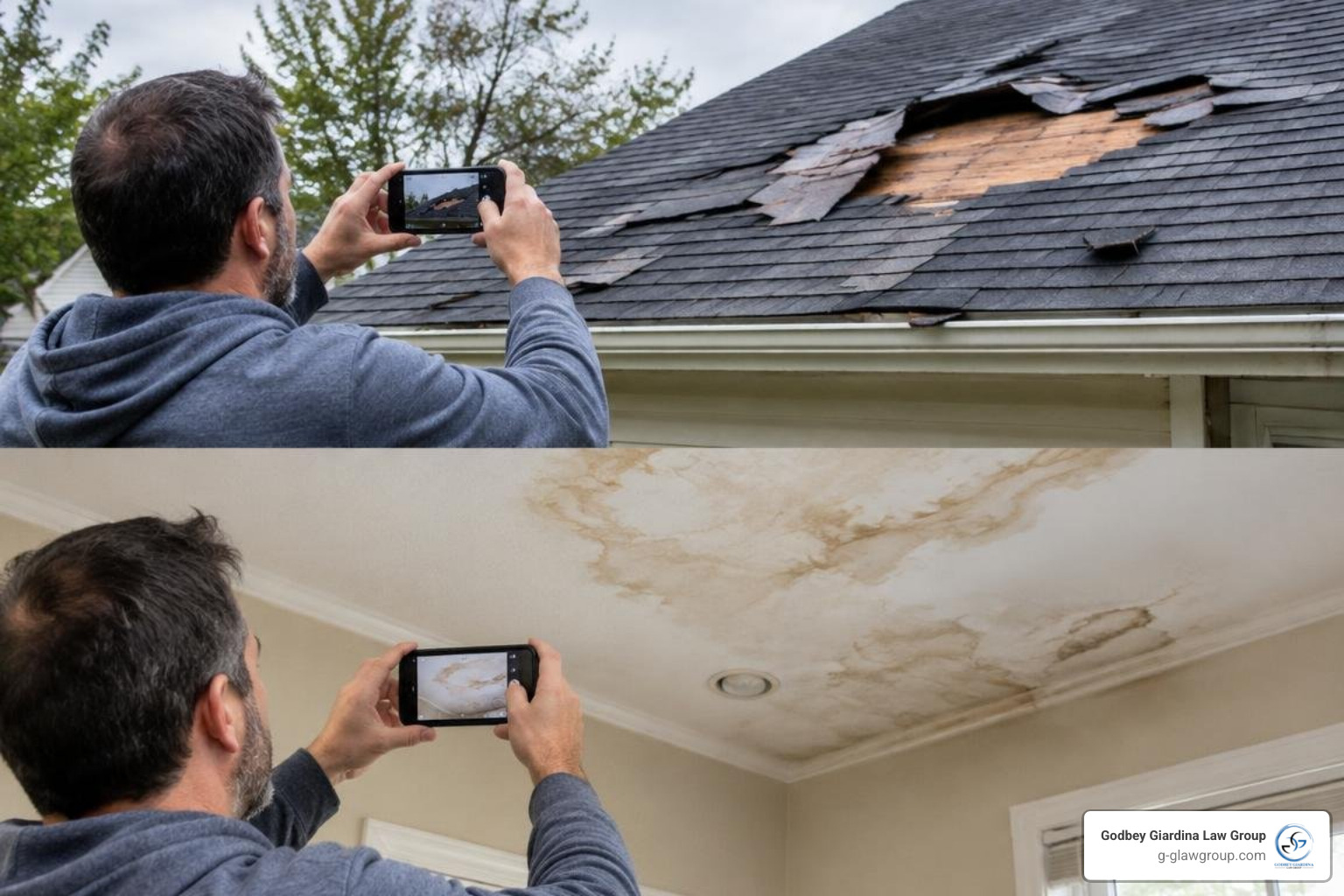
Taking organized, immediate action right after a disaster is vital to prevent an insurer from asserting that you failed your post-loss contractual obligations.
5 Critical Steps to Take Immediately After the Storm
- Prioritize Life and Safety First: Never enter a structurally compromised property. Beware of downed power lines, gas leaks, and standing water.
- Document Everything Before Cleaning: Take hundreds of high-resolution photos and wide-angle videos of all exterior elevations, the roof, outbuildings, ceilings, flooring, and individual damaged possessions.
- Notify Your Insurer Promptly: Report your loss to establish an official claim number, but stick strictly to facts without speculating on structural causes.
- Mitigate Further Damage: Tarp your roof, board broken windows, and dry standing water where safe. Keep every invoice; your policy requires reasonable steps to prevent secondary damage under your duties after a loss.
- Maintain a Claim Communication Log: Record the name, date, phone number, and exact summary of every single conversation with adjusters and insurance representatives.
Challenging Low Offers, Delays, and Procedural Hurdles
If the insurer’s initial estimate fails to cover actual local material and contractor costs, an attorney challenges their findings using a proven legal framework:
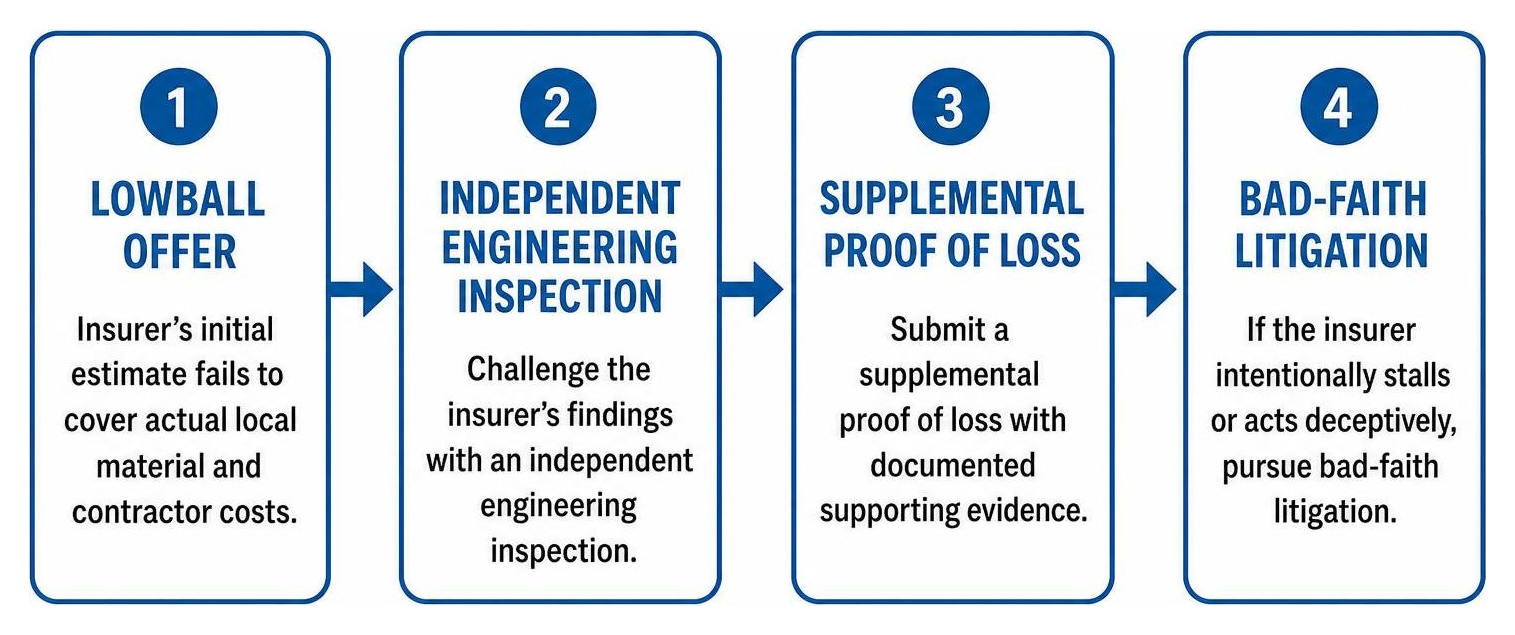
When insurance adjusters push for a formal examination under oath, having legal representation protects you from misleading questions designed to justify a claim denial. If an insurer intentionally stalls or acts deceptively, our bad faith lawyer team can hold them liable for statutory penalties and legal costs above the basic policy limits. You can explore our dedicated legal support for catastrophic losses on our hurricane damage practice page.
How Long Do You Have to File a Hurricane Insurance Claim?
Deadlines for reporting losses and filing lawsuits vary significantly depending on state law and policy language. As of November 2026, state legislatures throughout the Gulf Coast and western regions continue to modify these filing windows.
| State | Initial Claim Notice Deadline | Lawsuit Statute of Limitations (Property Damage) |
|---|---|---|
| Louisiana | Generally 1 to 2 years from date of loss (check specific policy provisions) | Typically 2 years from the date of loss (La. R.S. 22:1892 / 22:1973) |
| Florida | 1 year from the date of loss for initial notice; 18 months for supplemental | 1 year to file lawsuit under recent legislative reforms |
| Mississippi | Prompt notice (typically within 1 year per policy terms) | 3 years general statute of limitations (Miss. Code § 15-1-49) |
| Texas | Prompt notice (typically within 1 year per policy terms) | 2 years from the date the claim is formally denied or underpaid |
| Colorado | Prompt notice per policy language | Generally 2 to 3 years depending on breach of contract provisions |
Note: Deadlines for National Flood Insurance Program (NFIP) policies are governed strictly by federal law, requiring a signed, sworn Proof of Loss within 60 days of the flood event unless an official FEMA extension is granted. Missing these strict deadlines can permanently bar your recovery, making it essential to have an attorney review your dates immediately.
How Do Hurricane Claim Lawyers Get Paid?
Many homeowners worry that hiring an attorney will create heavy out-of-pocket expenses when money is already tight.
At Godbey Giardina Law Group, we represent property owners on a contingency-fee basis.
- Zero Upfront Retainers: You pay nothing out of pocket to hire us.
- No Fee Unless We Recover: Our attorney fees are calculated as an agreed-upon percentage of the insurance funds we successfully recover on your behalf. If we do not recover money for your claim, you do not owe us attorney fees.
- Transparent Agreements: All litigation costs, expert engineering fees, and expenses are clearly detailed in a written agreement before we begin work.
Frequently Asked Questions About Hurricane Claim Lawyers
Can I hire a lawyer after accepting an initial insurance payment?
Yes. Cashing an initial check from your insurer does not prevent you from seeking additional compensation, provided the check was not marked "full and final settlement" and you did not sign a broad liability release. Most initial checks are considered undisputed actual cash value payments, leaving the door wide open for your attorney to submit supplemental claims for the remaining damage.
Should I sign the insurer’s proof-of-loss form or settlement release?
Never sign a broad release or a final proof-of-loss form without legal guidance if you dispute the payout amount. Signing a general release can permanently waive your right to claim hidden structural damage, code upgrade expenses, or additional living expenses that emerge during contractor reconstruction.
Can a lawyer help with flood damage after a hurricane?
Yes. If your property was impacted by both wind and rising water, a lawyer can untangle the complex coverage disputes between your standard homeowners carrier and your NFIP flood carrier. If your insurer wrongfully blamed wind-driven roof damage on rising water, we step in to challenge that position. Learn more about fighting these specific coverage disputes by reading our flood damage claim guidance.
Conclusion
Recovering from a catastrophic hurricane is hard enough without having to fight your own insurance company for the benefits you paid for. Insurance carriers employ teams of adjusters, defense attorneys, and corporate engineers whose primary goal is protecting their bottom line.
At Godbey Giardina Law Group, we fight back. We combine exhaustive independent engineering investigations with extensive bad-faith litigation experience across Louisiana, Florida, and Colorado to hold carriers accountable. If your property claim was delayed, denied, or underpaid, do not settle for less than what your policy provides. Get help with a hurricane damage claim today by scheduling a comprehensive, risk-free case evaluation with our legal team.